
CSE: FNAU | OTCQB: FNAUF | FWB: F8NA
Four Nines Gold is advancing the Hayden Hill Project in Lassen County, California, a historic gold-silver mine that produced approximately 480,000 ounces of gold and 1.3 million ounces of silver historically.
But this is not just a historic mine story.
Four Nines is now applying modern 3D modelling, geophysics, structural geology, and targeted drilling to test whether Hayden Hill represents a larger gold system than previous operators fully understood.
Sign up to receive the latest Four Nines Gold investor presentation, drill updates, project news, and company developments directly by email.
Recorded at the Precious Metals and Critical Minerals Virtual Investor Conference, July 23, 2026.
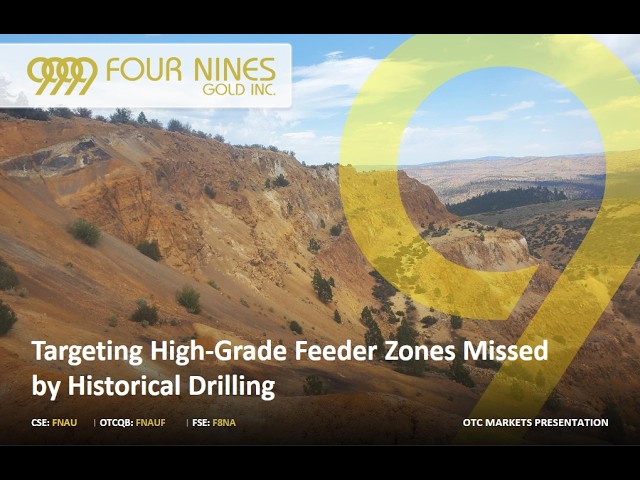
Hayden Hill is a past-producing gold-silver mine with a large historical database, meaningful historical production, and a new geological interpretation.
Previous operators primarily mined Hayden Hill as a shallow disseminated gold-silver deposit. That model worked. The district produced approximately 480,000 ounces of gold and 1.3 million ounces of silver historically.

But Four Nines believes the old model may not have captured the full system.
The Company's technical team has used historical drilling, mapping, and pit data to build a modern 3D model that supports a structurally controlled interpretation of Hayden Hill.
In simple terms: the old operators mined the near-surface gold. Four Nines is testing whether deeper feeder structures, vein intersections, and the system's "plumbing" were left underexplored.
That is the opportunity now being put to the drill bit.
Hayden Hill is not a grassroots exploration story. The project has already demonstrated that it can produce precious metals. Historical operations produced approximately:
That matters because Four Nines is not trying to prove that gold exists at Hayden Hill from scratch. The system is already known. The question now is whether previous operators fully understood it.
Four Nines believes the historical mining model may have focused on the shallow portion of the system, while deeper structural targets beneath and around the historic pits remain underexplored.
A historic U.S. gold-silver producer being re-evaluated through a modern geological lens.
Hayden Hill comes with a substantial amount of historical work. Previous operators completed approximately 742 historical drill holes and more than 327,000 feet of drilling, at an average hole depth of roughly 441 feet, or less than 150 metres.
That last point is important. Most historical drilling was shallow because the old mine plan was focused on near-surface open-pit mineralization.
If the better opportunity sits deeper in steeply oriented veins, feeder structures, and structural intersections, then the historical drilling may not have been designed to properly test it.
Four Nines is now using that historical data differently. The Company has applied modern 3D modelling, mapping, pit data, and geophysical work to identify priority targets beneath and adjacent to the historical pits.
This is not drilling blind. It is a modern reinterpretation of a past-producing gold-silver system.

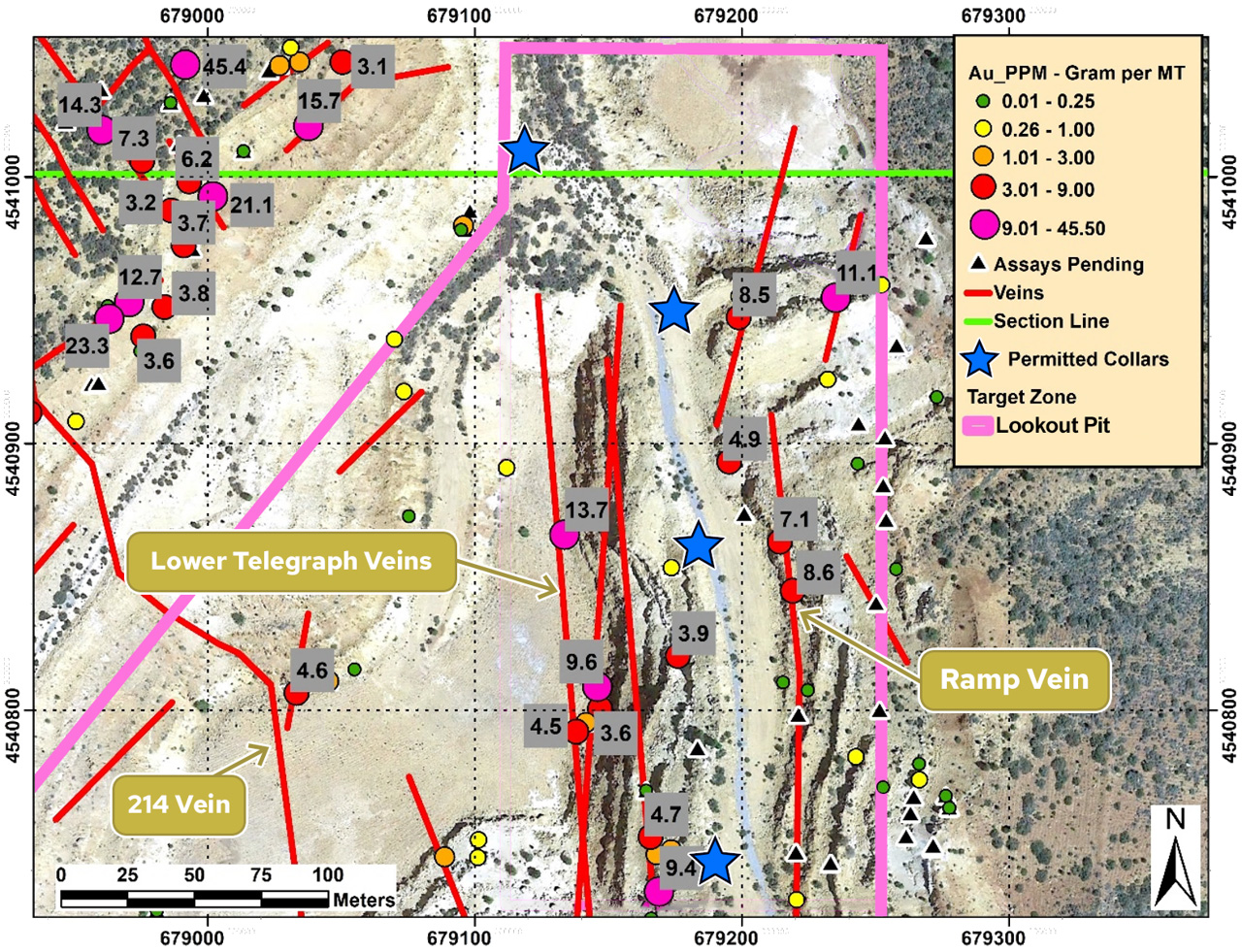
Although Hayden Hill was historically mined as a shallow bulk-tonnage operation, historical drilling reported several notable high-grade gold intervals. Reported historical intercepts include:
| 62.5 metres | 10.6 g/t gold |
| 21.3 metres | 7.5 g/t gold |
| 15.2 metres | 5.4 g/t gold |
| 13.7 metres | 12.0 g/t gold |
These are historical results reported by previous operators. They have not been independently verified by Four Nines and should be viewed in their historical context.
Even with that caution, they help explain why the Company believes deeper structural mineralization deserves modern follow-up.
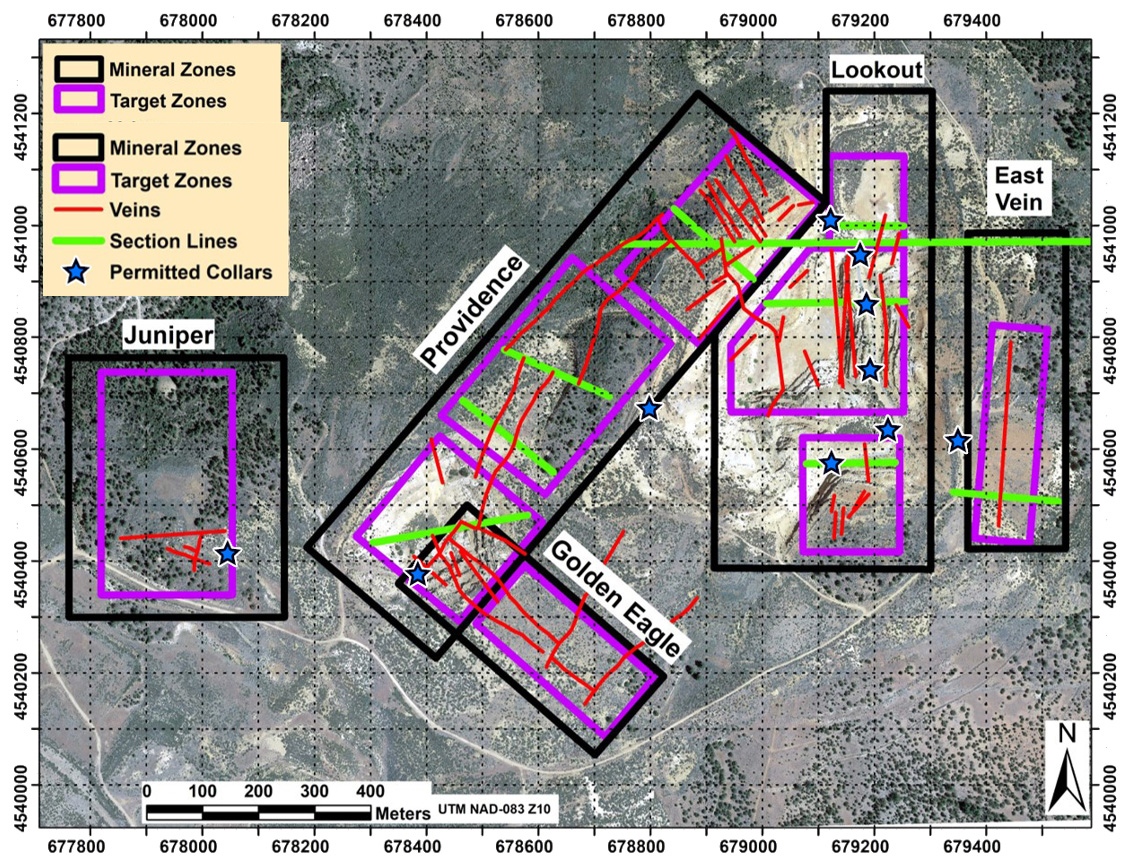
One of the key areas is the Northern High Grade Target, located beneath and adjacent to the historic Lookout Pit. Management believes this area is substantially unmined and open at depth.
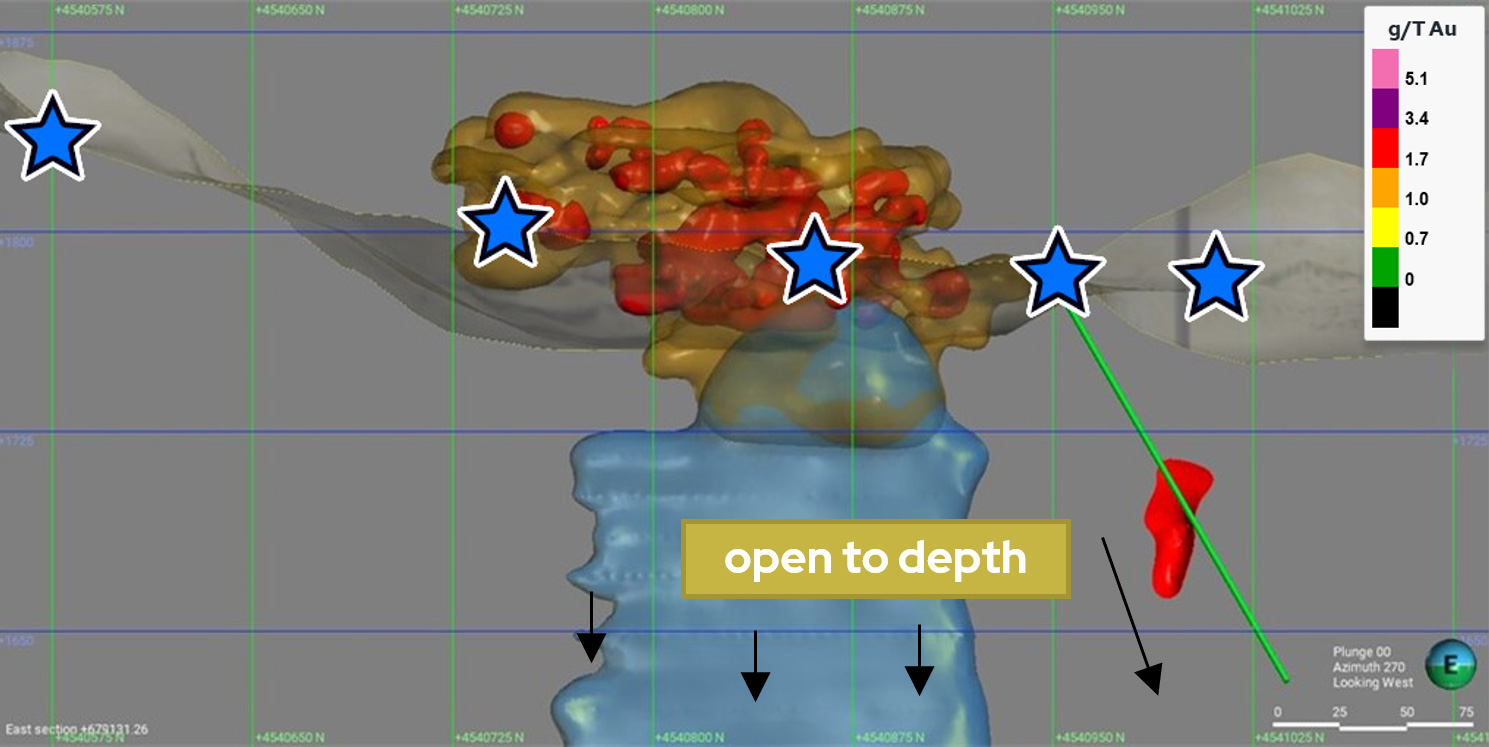

For investors, that is the core setup:
Hayden Hill is located in Lassen County, California, approximately 2.5 hours from Reno, Nevada, one of North America's major mining hubs.
The project is a brownfield, past-producing mine substantially located on private lands. That matters.
Many junior exploration projects start with no operating history, no existing project footprint, no infrastructure, and significant land access uncertainty. Hayden Hill is different. The project benefits from:
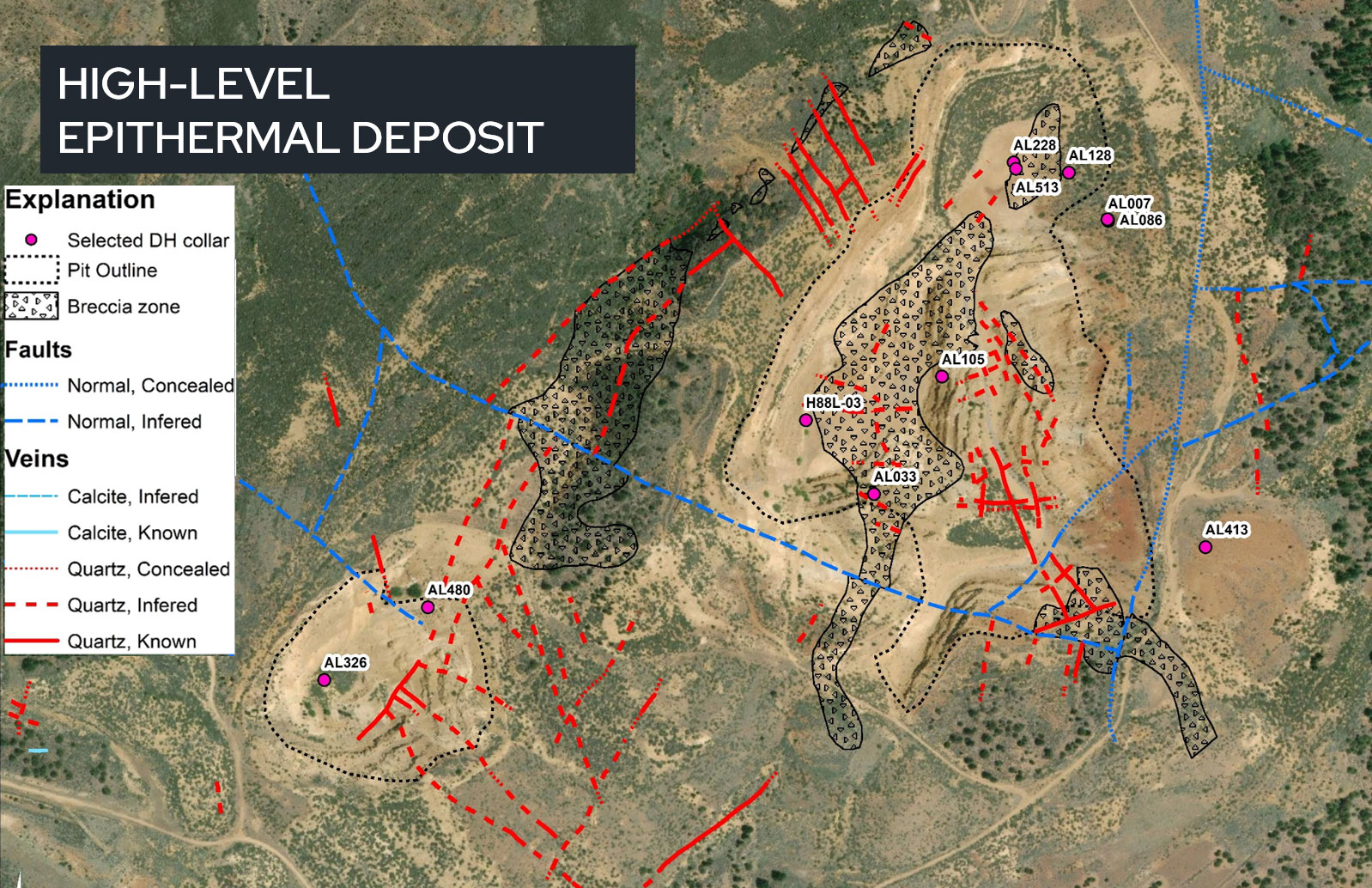
California is often viewed as a challenging mining jurisdiction, but Hayden Hill's history, Lassen County location, private-land component, and brownfield status help differentiate it from many grassroots exploration projects.
Four Nines is not trying to create a brand-new project footprint from scratch. The Company is building on a historic mine while testing a modern exploration model.
The opportunity at Hayden Hill is now moving toward the catalyst that matters most in junior mining: drilling.
Four Nines commenced its maiden summer 2026 drill program at Hayden Hill, targeting up to 5,000 feet of diamond core drilling. The Company has successfully permitted 10 drill stations designed to test key targets across Hayden Hill.
The program is designed to evaluate whether deeper feeder structures, vein intersections, hydrothermal breccia zones, and structural corridors may host mineralization that previous operators did not properly target.
Potential upcoming catalysts include:
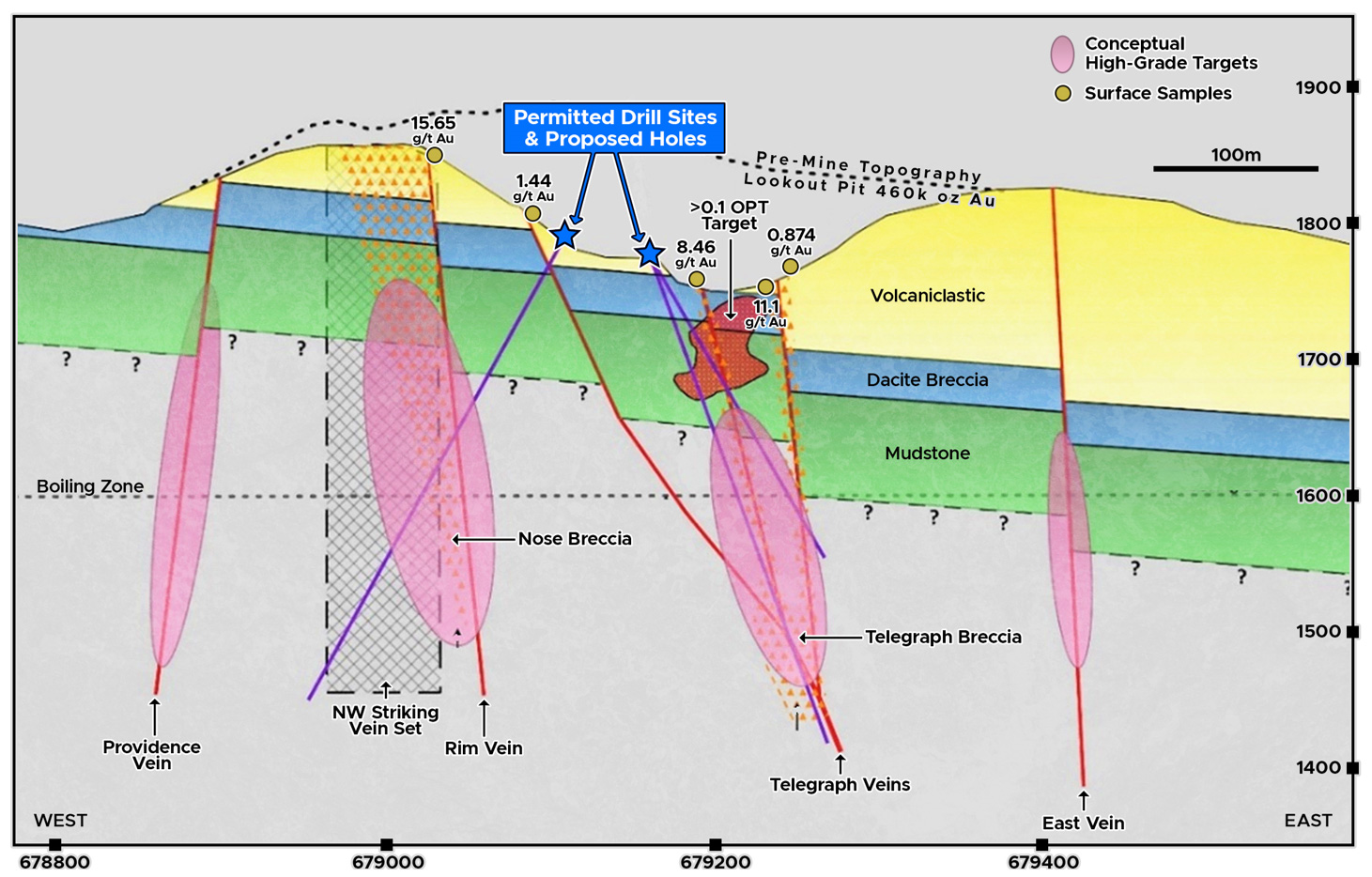
This is not a single-news-release story. It is a developing exploration campaign built around a clear geological question:
Was Hayden Hill mined as a shallow disseminated deposit when the higher-grade portions of the system may actually lie deeper within the structural plumbing?
Four Nines secured the right to acquire 100% of Hayden Hill through an option agreement with a subsidiary of Kinross Gold, one of the world's largest gold producers.
The structure matters because the Company did not commit a large amount of capital upfront to purchase the project outright. Instead, the option agreement allows Four Nines to direct a significant portion of capital toward exploration, drilling, modelling, and technical work.
For investors, that is important. The capital is being used to test the geological thesis in the ground.
The Hayden Hill story is still early, but it is not theoretical in the same way many grassroots exploration stories are. The mine was real. The historical production was real. The historical data exists.
The question now is whether modern geological thinking can unlock what previous operators missed.
Sign up to receive the investor presentation and future updates from Four Nines Gold.


Gold exploration is becoming more important as investors look for new discoveries, quality assets, and projects with clear catalysts. Hayden Hill fits into that conversation because it combines several elements investors look for in an exploration story:
This is not about discovering an unknown district from scratch. It is about taking a past-producing gold-silver system and asking whether it was only partially understood.
Historic mine. Modern model. Clear drill catalyst.
Download the presentation to review:
Sign up to receive the latest Four Nines Gold investor presentation, drill updates, project news, and company developments directly by email.